
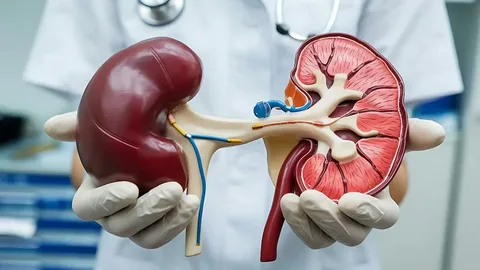
Acute Kidney Injury (AKI), formerly called acute renal failure, is a sudden decline in kidney function that hinders the body’s ability to maintain fluid, electrolyte, and waste product balance. In many cases, timely recognition and medical management help for kidney care. But in some severe instances, dialysis, or more broadly, renal replacement therapy (RRT), becomes necessary. Understanding when, how, and why dialysis is used in AKI is vital for optimizing outcomes. In this article, we aim to explain:
-
What AKI is, its causes and stages
-
Why and when dialysis becomes necessary in AKI
-
Types of dialysis/RRT used in AKI
-
Risks, benefits, timing, and decision-making
-
Aftercare, recovery, and prognosis
What Is Acute Kidney Injury (AKI)? Definitions, Causes, and Stages
Definition
Acute Kidney Injury refers to an abrupt decrease in kidney function over hours to days, resulting in:
-
A rise in serum creatinine (e.g. ≥ 0.3 mg/dL increase within 48 hours, or ≥ 50% increase from baseline in 7 days)
-
Decreased urine output (oliguria: < 0.5 mL/kg/h over 6-12 hours; anuria)
AKI is generally reversible if prompt treatment addresses its cause.
Common Causes
AKI arises from a variety of etiologies, often grouped into:
-
Pre-renal causes: Reduced renal perfusion from dehydration, low blood pressure, heart failure, or sepsis.
-
Intrinsic renal causes: Direct injury to kidney structures — e.g., acute tubular necrosis (due to ischemia or toxins), glomerulonephritis, interstitial nephritis.
-
Post-renal causes: Obstructions in urinary tract (e.g. stones, tumors, enlarged prostate) blocking urine flow.
Staging of AKI
Stages (severity levels) help guide management and prognosis. One commonly used classification is from KDIGO or similar (also in UK guidelines). Some key points:
-
Stage 1: Mild – small increase in creatinine, mild or transient drop in urine output.
-
Stage 2: Moderate – creatinine rises 2-2.9× baseline, longer / more marked oliguria.
-
Stage 3: Severe – creatinine ≥ 3× baseline or very high absolute values, very low urine output, or need for RRT.
When Is Dialysis (Renal Replacement Therapy) Indicated in AKI?
Dialysis isn’t needed in most AKI cases; it’s reserved for severe derangements or when life-threatening complications arise, or when conservative treatment fails. Clinical judgment is key.
Here are the major indications:
Emergent (Life-threatening) Indications
These are the AEIOU mnemonic components, often considered non-optional:
| Indication | Explanation |
|---|---|
| A = Acidosis | Severe metabolic acidosis that cannot be corrected medically (e.g. pH < ~7.1-7.2), or when patient is unable to tolerate correction or bicarbonate therapy. |
| E = Electrolyte abnormalities | Especially hyperkalemia unresponsive to medical therapy (e.g. potassium > ~6.0-6.5 mEq/L or with ECG changes) which risks cardiac arrhythmias. |
| I = Ingestion / intoxication | Poisoning with dialyzable toxins or overdoses. |
| O = Overload of fluid / volume overload | When fluid retention leads to pulmonary edema or respiratory compromise not amenable to diuretics. |
| U = Uremia | Accumulation of nitrogenous waste (e.g. high BUN/creatinine), which leads to uremic symptoms (pericarditis, encephalopathy, bleeding, nausea). |
Other Indications (Non-Emergent or Relative Conditions)
When the above are absent, but patient meets severity criteria or fails to respond to conservative management:
-
Severe azotemia (very high blood urea nitrogen or creatinine) even without overt uremic symptoms.
-
Persistent oliguria / anuria (low or no urine output) especially when prolonged.
-
Progressive electrolyte disturbances, acid-base imbalance.
-
Volume overload not manageable with diuretics or other medical therapy.
Timing of Initiation
The question of “when” to start dialysis in AKI remains an area of active research. Some key findings:
-
Early initiation (before classical indications) has been studied, but multiple trials (AKIKI, IDEAL-ICU, STARRT-AKI) show no clear mortality benefit, and more adverse events in some early groups.
-
Delaying RRT until a clinical emergency (e.g. hyperkalemia, volume overload, uremia) is often safe in absence of life-threatening conditions.
Thus, we consider not just lab values but clinical trajectory, reversibility potential, overall comorbidities, and patient status.
Types of Dialysis / Renal Replacement Therapy in AKI
When dialysis is indicated, there are several modalities. Selection depends on patient condition, resources, and specific clinical context.
| Modality | Description | Advantages | Disadvantages / Considerations |
|---|---|---|---|
| Intermittent Hemodialysis (IHD) | Traditional in-center sessions (3-4 hrs or more), multiple times per week. Blood circulated through dialyzer machine. | Rapid correction of potassium, acidosis, fluid removal; widely available. | Hemodynamic instability risk (especially in critically ill); greater shifts; needs vascular access. |
| Continuous Renal Replacement Therapy (CRRT) | Slow, continuous dialysis over 24h+ (e.g. continuous venovenous hemofiltration or hemodialysis). | Gentler fluid and electrolyte shifts; better tolerance in unstable ICU patients. | Resource intensive; requires specialized equipment and staff; slower correction. |
| Sustained Low Efficiency Dialysis (SLED) or Prolonged Intermittent RRT | Intermediate between IHD and CRRT; sessions of ~6-12 hours. | Better tolerated than IHD; less resource intensive than CRRT. | Requires staffing; may be less efficient for very high toxin loads. |
| Peritoneal Dialysis (PD) | Using abdominal cavity as filtering membrane; fluid instilled and drained. | Useful where vascular access not feasible; gentler; can be done in non-ICU/community settings. | Slower; risk of peritonitis; not ideal if massive fluid overload or in certain surgical/abdominal conditions. |
The choice is tailored: in critically ill, hemodynamically unstable patients, CRRT or SLED may be preferred; in more stable patients, intermittent hemodialysis is often sufficient.
Clinical Decision-Making: Balancing Risks & Benefits
Weighing when to start dialysis involves considering many factors:
Risks of Delayed Dialysis
-
Worsening fluid overload leading to pulmonary edema, hypertension, and respiratory failure.
-
Persisting or worsening hyperkalemia → arrhythmias.
-
Accumulation of toxins (uremia) causing encephalopathy, pericarditis, bleeding tendency.
-
Prolonged metabolic acidosis which can harm multiple organs.
Risks of Initiating Dialysis Early / Unnecessarily
-
Procedural risks: vascular access complications, bleeding, infection.
-
Hemodynamic instability, hypotension due to rapid fluid shifts.
-
Cost, resource utilization.
-
Possible dialysis dependence, or delaying native kidney recovery.
Prognostic Factors to Consider
-
Baseline kidney health: pre-existing chronic kidney disease (CKD) increases risk of incomplete recovery.
-
Severity and duration of AKI: longer duration of oliguria, more severe stages predict worse outcomes.
-
Comorbidities: sepsis, heart failure, liver disease, diabetes.
-
Age, overall medical resilience.
What the Evidence Says: Studies & Guidelines
-
Large randomized controlled trials (e.g., AKIKI, STARRT-AKI, ELAIN) have assessed early vs delayed dialysis initiation. General findings suggest that in many patients, waiting until clear clinical indications emerges does not worsen mortality, and early initiation may lead to higher risk of complications or longer dependency on RRT.
-
Guidelines (e.g. from kidney societies, nephrology associations) emphasize that decision to initiate dialysis should be individualized, not solely based on a lab number, but based on both biochemical derangements and clinical condition.
Dialysis Procedure, Access, and Care
When dialysis is initiated in AKI, the following are crucial:
Dialysis Access
-
A large vascular catheter (non-tunneled or tunneled) is often used for hemodialysis or CRRT. Common sites include internal jugular or femoral veins.
-
For peritoneal dialysis, a catheter is placed in the abdominal cavity.
Treatment Settings
-
Critical kidney care units vs general wards vs outpatient settings – but most dialysis in AKI happens in hospitals / ICUs.
-
Staffing expertise, infection control, close monitoring of vital signs, fluid balance, electrolytes.
Monitoring During Dialysis
-
Vital signs (blood pressure, heart rate) to detect hypotension or instability.
-
Fluid removal goals to avoid under- or over- removal.
-
Electrolyte monitoring (especially potassium, bicarbonate).
-
Acid-base balance.
Nutritional and Medication Management
-
Adjust medications: many drugs are renally excreted; dosage may need reduction or discontinuation.
-
Maintain adequate protein and caloric intake, but avoid further burdening kidneys with waste products.
-
Monitor for and prevent complications (infection, bleeding, catheter complications).
Recovery, Prognosis, and Aftercare
Dialysis in AKI is often temporary. Many patients recover some or most kidney function, though in some cases, residual impairment or progression to CKD occurs.
Recovery Timeline
-
Many patients improve within 1-4 weeks of AKI onset, especially with prompt management.
-
Complete recovery may take longer; sometimes months.
Aftercare
-
Once dialysis is discontinued, regular follow-up of kidney function (creatinine, eGFR), urine output, electrolytes.
-
Control of contributing factors (e.g. avoiding nephrotoxins, ensuring good hydration, managing comorbidities).
-
Lifestyle changes: proper diet, avoiding indiscriminate use of medications that stress kidneys (NSAIDs etc.), infections management.
Potential Long-Term Consequences
-
Some patients may develop residual CKD, depending on AKI severity and duration.
-
Increased risk of cardiovascular disease.
-
Possible need for dialysis eventually if function deteriorates or CKD progresses.
Case Study Illustrations
Here are two illustrative clinical scenarios:
Case 1: Acute AKI in Sepsis, Hemodynamically Unstable
-
Patient develops AKI Stage 3 in setting of septic shock. Urine output very low; rising creatinine; fluid overload; hyperkalemia unresponsive to medical therapy.
-
Because of instability, CRRT is chosen to gently manage fluid and electrolytes with less hemodynamic disturbance.
-
Once patient stabilizes, and labs improve, intermittently transition to IHD or SLED as needed.
Case 2: Less Severe AKI, Conservative First Approach
-
Patient has stage 2 AKI; creatinine rising but no life-threatening hyperkalemia or fluid overload. Urine output moderate.
-
Conservative measures: correct hemodynamics, remove offending agents, optimize fluids and electrolytes.
-
Dialysis deferred until clear indications manifest. This avoids unnecessary catheter placement, risk, and perhaps allows spontaneous renal recovery.
Summary: Key Principles for Dialysis in AKI
-
Indications for dialysis in AKI involve life-threatening electrolyte abnormalities, acid-base disturbances, volume overload, or uremia.
-
Timing should be individualized: earlier is not always better; overtreatment can carry harm.
-
Modality selection depends on patient status, severity, facility resources.
-
Recovery is possible in many cases; follow-up and prevention are essential.
-
Shared decision making among healthcare providers, patients, and family is critical.
At Big Apple Medical Care, we emphasize early detection, appropriate decision-making, and individualized care when managing AKI and dialysis. Our team works closely with nephrology, critical care, nursing, and ancillary services to ensure patients receive the right therapy at the right time, minimizing complications and maximizing chances for kidney recovery.
If you have experienced kidney injury, or suspect you might be at risk, don’t wait—contact us. Early management can be life-saving.