
At Big Apple Medical Care, our goal is to provide in-depth, medically accurate guidance on musculoskeletal procedures. In this article, we examine in detail the advantages and drawbacks of arthroscopic rotator cuff repair—comparing outcomes, indications, and realistic expectations so patients and clinicians can make informed decisions together.
Anatomy and Pathophysiology: Why Rotator Cuff Tears Matter
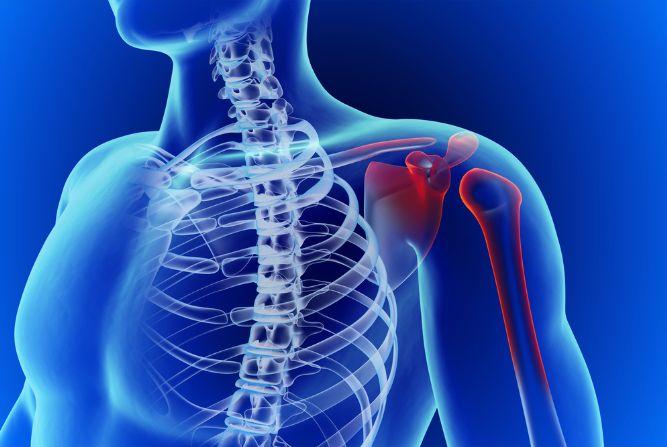
The rotator cuff comprises four tendons and muscles (supraspinatus, infraspinatus, teres minor, subscapularis) that stabilize the humeral head in the glenoid socket and allow rotational and overhead motion.
When one or more tendons tear—due to trauma, degenerative wear, impingement, or a combination—this destabilizes shoulder mechanics. That leads to pain, weakness, reduced range of motion, and, over time, compensatory changes and joint wear.
Small tears may be asymptomatic or manageable non-surgically, but more severe or symptomatic tears often require surgical repair to restore function.
What Is Arthroscopic Rotator Cuff Repair?
Arthroscopic surgery is a minimally invasive technique in which the surgeon makes small incisions (portals) and inserts a camera (arthroscope) plus specialized instruments to visualize and repair the rotator cuff, often combined with debridement, subacromial decompression (acromioplasty), or addressing associated shoulder pathology (biceps tendon lesions, labral tears).
After visual inspection, the torn tendon edges are debrided to healthy tissue, mobilized if needed, and reattached to bone—typically via suture anchors—to recreate the anatomic insertion.
Compared to open surgery, arthroscopy avoids large incisions, deltoid disruption, and extensive soft tissue dissection.
Major Benefits of Arthroscopic Rotator Cuff Repair
Minimally Invasive Approach & Reduced Tissue Trauma
Because only small portals are used, damage to surrounding muscles (like the deltoid), fascia, and soft tissue is minimized. This leads to:
-
Less pain post-operatively
-
Reduced scarring
-
Lower incidence of deltoid dysfunction or detachment complications
-
Lower infection risk compared to open methods
Superior Visualization and Access
Arthroscopy provides a “global” view of the shoulder joint, allowing access from different angles. Surgeons can inspect the rotator cuff footprint, detect concomitant lesions, and perform additional procedures (e.g. removing bone spurs, addressing biceps pathology) in the same session.
This comprehensive access may yield better repair planning and execution, especially in complex or retracted tears.
Faster Early Recovery & Improved Comfort
Because muscle and tissue injury is less, patients often report less pain in the early post-operative period. Rehabilitation can begin earlier in terms of passive motion, reducing stiffness. Many patients achieve return to light daily activities more quickly than with open surgery.
Lower Complication Rates & Surgical Morbidity
Smaller incisions and less exposure reduce the risks of infection, bleeding, and wound complications. There is also a reduced risk of deltoid muscle injury.
Additionally, because arthroscopy is often ambulatory (outpatient), hospital stay is minimized.
Comparable Clinical Outcomes (in Expert Hands)
Multiple studies suggest that, when performed by experienced surgeons, arthroscopic repairs yield functional outcomes and success rates comparable to open or mini-open techniques for appropriately selected tears.
Some authors report good to excellent results in over 90% of cases.
Limitations, Risks, and Challenges of Arthroscopic Repair
Tear Size, Retraction, and Tissue Quality Constraints
Large, massive, or chronic tears that have retracted significantly or undergone fatty infiltration and muscle atrophy are more difficult (or sometimes impossible) to repair arthroscopically. Tissue may be too degenerated or tension may be too high for reliable fixation.
In such cases, augmentation techniques, grafts, or open approaches may be necessary.
Learning Curve & Surgeon Expertise Dependency
Arthroscopic rotator cuff repair is technically demanding. Outcomes heavily depend on the experience and skill of the surgeon and their team. Surgeons inexperienced in arthroscopic technique may have longer operative times, higher failure (retear) rates, or complications.
Where a center has more experience with open techniques, open may still outperform arthroscopy in that context.
Higher Retear / Failure Risk in Some Cases
Some studies report that arthroscopic repairs may have slightly higher rates of retear or failure in certain tear patterns, particularly in large tears or cases with poor tissue quality.
Additionally, durability over very long follow-up remains under evaluation, especially as techniques evolve.
Slower Biological Healing Process
The method of repair does not accelerate tendon-bone healing: whether open or arthroscopic, the tendon must biologically integrate to bone over weeks to months. Arthroscopy doesn’t change that healing timeline.
Hence, early motion and load must still be carefully managed to prevent repair failure.
Postoperative Stiffness, Pain, and Adhesions
Even in arthroscopic approaches, patients may develop shoulder stiffness, pain, or adhesive capsulitis, particularly if rehabilitation is delayed or aggressive loading is introduced prematurely.
Other risks include nerve or vessel injury, bleeding, suture anchor failure, infection, or need for revision surgery.
Cost, Time, and Equipment Needs
Arthroscopic surgery is resource intensive: specialized equipment, implants (anchors), arthroscopes, camera systems, and dedicated operative setups are required. Costs may be higher than simpler open techniques. Operating time may also be longer in certain challenging cases or for less experienced surgeons.
Comparisons with Open and Mini-Open Techniques
Open and mini-open rotator cuff repairs have the advantage of direct access and simpler instrumentation. In certain settings (very large tears, complex reconstructions), they may allow more robust fixation or grafting.
However, open techniques typically involve:
-
Larger incisions
-
Deltoid splitting or detachment
-
Longer soft tissue healing
-
Greater postoperative pain
-
Higher risk of deltoid dysfunction or scarring
In comparative outcomes, many studies conclude that in skilled hands, arthroscopic and open repairs provide similar functional results, but arthroscopy often yields better early recovery and less morbidity.
There are tradeoffs: in certain tear patterns or in surgeons unfamiliar with arthroscopy, open may still be preferred.
Patient Selection and Indications
A successful arthroscopic rotator cuff repair hinges on selecting appropriate candidates. Key considerations:
-
Symptomatic tears: pain, weakness, functional limitation refractory to months of conservative treatment (physical therapy, injections).
-
Tear size and retraction: smaller to medium tears with reasonable mobility are ideal. Chronic, massively retracted tears may be less suitable.
-
Tissue quality and muscle status: better tendon integrity and minimal fatty infiltration favor success.
-
Patient health and compliance: ability to undergo surgery and adhere to rehabilitation, with understanding of limitations and potential outcomes.
-
Surgeon expertise and resource availability: the surgeon and center should have the experience and infrastructure for arthroscopic repair.
In many cases, a trial of conservative management (physical therapy, anti-inflammatory therapy, activity modification) is pursued before recommending surgery, unless the tear is acute, high demand, or in younger patients.
Rehabilitation, Healing Timeline, and Outcome Expectations
Postoperative Protection & Early Phase
Patients typically wear a sling (often for 4–6 weeks) to protect the repair and avoid undue loads. Passive range-of-motion exercises are introduced early under supervision to prevent stiffness.
Mid-Phase Strengthening
By weeks 6–10 (depending on tear size and surgeon preference), gradual active motion and light strengthening begin, avoiding undue stress at the repair site.
Return to Activity
-
Daily activities: Many patients resume light tasks around 8–12 weeks.
-
Stronger loading, sports, or overhead activity: Typically delayed until at least 4–6 months, sometimes up to 9–12 months, depending on repair complexity and healing.
-
Full tendon-to-bone healing takes months; in smaller tears, anchorage often becomes biologically robust by 6–8 weeks, but remodeling continues.
Outcomes and Prognosis
Many patients—especially with smaller tears—achieve substantial pain relief, improved strength, and near-normal range of motion.
However:
-
In larger tears or poor tissue, full restoration may be incomplete.
-
Some residual weakness or functional limitation may persist.
-
Retear rates vary: some studies report 6–8% or higher in select populations.
-
Outcomes are better when surgery is not excessively delayed (i.e. earlier repair tends to have better success).
Tips for Patients Considering Arthroscopic Repair
-
Choose an experienced surgeon with a proven track record in arthroscopic rotator cuff repair.
-
Get a detailed MRI or imaging assessment including tear size, retraction, muscle changes, and coexisting shoulder pathology.
-
Review realistic expectations: relief of pain is highly probable; full strength recovery depends on tear characteristics and rehab.
-
Commit to rigorous rehabilitation—functional success depends heavily on compliance and quality of therapy.
-
Be patient—healing and remodeling extend over many months.
-
Consider revision or augmentation options in advance, especially for large or chronic tears.
Conclusion
Arthroscopic rotator cuff repair represents a modern, minimally invasive approach that offers significant benefits: less soft tissue trauma, faster early recovery, lower morbidity, excellent visualization, and the ability to address concomitant shoulder pathology concurrently. In skilled hands and with appropriate case selection, its outcomes rival those of traditional open techniques.
However, it is not a panacea. Limitations include challenges with extremely large or chronic tears, reliance on surgeon expertise, risk of retear, and the biological reality that tendon healing to bone takes time regardless of technique. Moreover, postoperative stiffness, pain, and cost factors must be acknowledged.
At Big Apple Medical Care, we aim to help patients weigh benefits and risks, understand what their specific case may tolerate or require, and guide them through decision making with clarity. Arthroscopic repair is a powerful tool—but success ultimately depends on the interplay of tear pattern, surgical skill, rehabilitation, and realistic expectations.